✓ Since 2013 • Manufacturer Direct • Secure Checkout • Global Delivery

Wire Flame Spray Guns: Complete Guide to Operation, Applications, Benefits & Working Principle (2025 Edition)
By Balaji Udyog – Flame Spray & Thermal Spray Experts
12/14/20255 min read
Thermal spray technology has grown rapidly across industries such as engineering, steel, automotive, mining, textile, and oil & gas. Among all thermal spray methods, Wire Flame Spray stands out as one of the most economical, simple, and reliable metal coating processes used worldwide.
A Wire Flame Spray Gun uses heat from a fuel gas (Propane/LPG or Acetylene) mixed with Oxygen to melt a metal wire—typically 3.15 mm—and propel molten droplets onto the component surface. This forms a strong, dense, and corrosion-resistant coating.
If you are new to flame spray or looking to understand how these guns work, this detailed guide will walk you through:
What is Wire Flame Spray?
How does a flame spray gun work?
Propane vs LPG vs Acetylene usage
Suitable wire materials (3.15 mm)
Applications across industries
Advantages of flame spray
Required equipment and setup
Safety guidelines
Why Balaji Udyog flame spray guns are trusted worldwide
What Is Wire Flame Spray?
Wire flame spray is a thermal spray coating process where a metal wire is continuously fed into a spray gun. A fuel gas (Propane/LPG or Acetylene) and Oxygen create a high-temperature flame that melts the wire. Compressed air then atomizes and accelerates the molten metal onto the work surface.
The result is a strong, functional metal coating that protects parts from:
Wear
Corrosion
Erosion
Heat
Friction
Wire flame spray is widely used because it is:
Affordable
Mechanically simple
Easy to maintain
Suitable for large areas
Capable of high-bond coatings
How Does a Wire Flame Spray Gun Work? – Step-By-Step
Here is the simplified working principle:
1. Fuel Gas + Oxygen Mixing
The gun receives fuel (Propane/LPG or Acetylene) from a cylinder and Oxygen from another cylinder.
These gases mix inside the gun and create a controlled, high-temperature flame at the nozzle.
2. Metal Wire Feeding
A 3.15 mm diameter metal wire (Zinc, Aluminum, Stainless Steel, Nickel, Bronze, etc.) is inserted into the wire feeding assembly.
A drive mechanism pushes the wire towards the flame at a controlled speed.
3. Melting of the Wire
As the wire enters the flame, it melts instantly due to the high temperature.
Propane/Oxygen flame temperature ≈ 2800°C
Acetylene/Oxygen flame temperature ≈ 3100°C
This makes the process suitable for a wide range of metals.
4. Atomizing and Spraying
Compressed air breaks the molten metal into tiny droplets and accelerates them towards the substrate.
These molten particles impact the surface and flatten, forming:
A mechanically bonded
Strong
Uniform
Protective
coating layer.
5. Layer Formation
Multiple passes build the coating thickness as required:
Typical thickness: 50–500 microns
Heavy-duty coatings: 1–2 mm depending on material
Fuel Options for Flame Spray Guns
Your gun supports all major fuel combinations:
1. Propane + Oxygen (Most Common)
Clean burning
Economical
Easy availability
Stable flame
Suitable for general coatings (Zinc, Aluminum, Bronze)
2. LPG + Oxygen
Similar to propane
Often cheaper in industrial markets
Lower flame temperature than acetylene
Excellent for corrosion prevention coatings (Zn/Al)
3. Acetylene + Oxygen
Highest flame temperature
Best for high-melting-point wires
Produces finer spray
Ideal for repair coatings, mild steel, stainless steel
This versatility is a major reason Balaji Udyog Flame Spray Guns are used globally.
Wire Materials Used in 3.15 mm Size
The most common wire diameter for flame spray is 3.15 mm, due to stable feeding and consistent melting.
Popular wire materials:
Wire MaterialApplicationZinc (Zn)Anti-corrosion coatings for pipelines, tanks, structuresAluminum (Al)Marine protection, heat-resistant coatingsAluminium BronzeWear-resistant coating for pumps, shaftsCopperElectrical and conductive coatingsStainless SteelHigh wear parts, chemical resistanceMolybdenumHigh-friction surfaces, automotive componentsNickel & Nickel-AlloysHigh-temperature and corrosion-resistant usesBronzeBearing repair, pump sleeves
The combination of 3.15 mm wire and propane/oxygen flame gives maximum performance with minimum cost.
Applications of Wire Flame Spray Coating
Wire flame spray is used in almost every engineering field. Below are the most important industries:
1. Automotive Industry
Transmission shafts
Piston rings
Clutch plates
Brake components
Wear sleeves
2. Steel & Rolling Mills
Zinc coating for rollers
Bronze coating for continuous casting rolls
Repair of worn shafts
3. Marine Industry
Aluminum coatings for ship decks
Anti-corrosion for offshore equipment
4. Oil & Gas
Protection against corrosion & saltwater
Pump parts
Valves and sealing surfaces
5. Engineering & Maintenance Repairs
Build-up worn shafts
Pump sleeves
Motor housings
Bearings and journals
6. Textile & Printing
Hard coat for rollers
Ceramic-based composite layers
7. Heavy Machinery
Restoring tolerances on large components
Repair instead of replacement (cost saving 60–80%)
Because the equipment is portable, flame spray guns are also widely used for on-site coating jobs.
Why Choose Wire Flame Spray? – Key Benefits
1. Cost-Effective
Among all thermal spray processes (HVOF, Plasma, Arc Spray), wire flame spray is the most economical in terms of:
Equipment cost
Gas consumption
Wire cost
Maintenance
2. Easy to Operate
Technicians can learn to operate the gun within hours. No advanced software or electronics are needed.
3. Portable and Versatile
Can be used inside workshops or directly on-site at:
Bridges
Tanks
Pipelines
Large steel structures
4. Excellent Coating Adhesion
Coatings bond mechanically and provide:
Strong grip
Dense structure
Long-term protection
5. Wide Range of Materials
From zinc to stainless steel, many coating materials can be used depending on application.
6. Repairing Worn Parts
Rather than replacing expensive parts, flame spray allows engineers to:
Rebuild
Restore
Strengthen
the damaged surfaces.
7. Minimal Heat Transfer
Surface temperature remains low (below 150°C), so there is:
No distortion
No structural change
No metallurgical damage
This makes it safe for delicate materials and thin components.
Equipment Required for Wire Flame Spray
To operate a flame spray gun, you need:
Wire Flame Spray Gun (Balaji Udyog 12M Model)
Fuel Gas Cylinder (Propane/LPG or Acetylene)
Oxygen Cylinder
Gas Regulators
Hoses (Oxygen, Fuel & Air)
Air Compressor (Minimum 4–5 bar)
Metal Wire (3.15 mm)
Surface Preparation Tools
Grit blaster
Grinder
Cleaning solvents
Our guns support all standard fittings and are compatible with most wires in the market.
Surface Preparation – The Secret to Strong Coatings
Coating performance depends heavily on surface preparation.
Before spraying:
1. Cleaning
Remove oil, rust, paint, and dust.
2. Grit Blasting
Using Aluminum Oxide or Grit, achieve a roughened surface with:
Anchor Profile: 50–80 microns (typical)
Cleanliness: SA 2.5
This rough profile allows molten particles to mechanically lock into the surface.
3. Pre-Heating (if required)
Some materials require mild warming to remove moisture.
Safety Guidelines for Flame Spray Gun Operation
Working with oxygen and fuel gases requires strict safety precautions.
1. Personal Protective Equipment
Safety goggles
Flame-resistant clothing
Leather gloves
Respirator mask
Hearing protection
2. Gas Handling
Always use certified gas regulators
Check hoses for leaks
Secure cylinders upright
Never use oil/grease near oxygen systems
3. Operational Safety
Maintain proper ventilation
Keep fire extinguishers nearby
Avoid spraying near flammable materials
Do not point the gun at any person
Following these guidelines ensures safe, smooth, and reliable coating performance.
Why Choose Balaji Udyog Wire Flame Spray Guns?
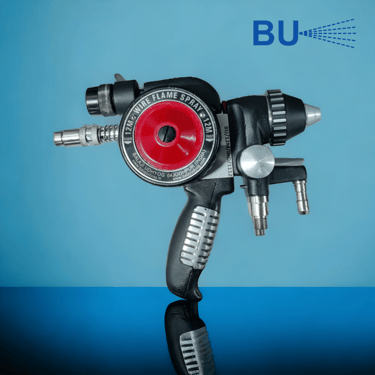
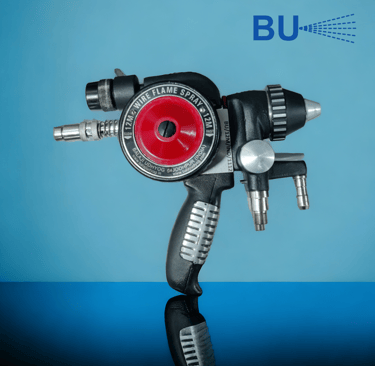
Your image shows one of the Balaji Udyog Wire Flame Spray Guns (12M-136/12M-135 models) in action—designed for industrial-duty use with precision engineering.
Key Features:
Compatible with 3.15 mm wires
Runs on Propane/LPG + Oxygen or Acetylene + Oxygen
Heavy-duty wire feed mechanism
Stable flame and efficient melting
Smooth air atomization for perfect coating
Lightweight and ergonomic design
Long-life nozzles and spare parts available
Robust metal body for industrial environments
Advantages of Balaji Guns
High reliability
Affordable spare parts
Low maintenance requirement
Long operating life
Easy availability of consumables
Our guns are widely used in:
Workshops
Industrial plants
Thermal spray contractors
Maintenance & repair service providers
Conclusion
Wire Flame Spray remains one of the most powerful and economical thermal spray processes in the world. Whether you need corrosion protection, wear resistance, or part rebuilding, a reliable flame spray gun using 3.15 mm wire and Propane/Oxygen or Acetylene/Oxygen offers outstanding performance.
With the right equipment—like Balaji Udyog’s Flame Spray Guns—industries can achieve long-lasting, high-quality coatings while keeping operational costs low.
If you are in need of:
Flame spray guns
Thermal spray equipment
Spare parts
Coating guidance
you can always contact Balaji Udyog, a trusted name in thermal spray technology.
CONNECT
Stay updated with our latest products.
Support
+91 92692 88805
© 2026 Balaji Udyog. All rights reserved.
EQUIPMENT
SHERAJET HVOF TORCH
+91 92564 88805
Blogs
support@buspray.com